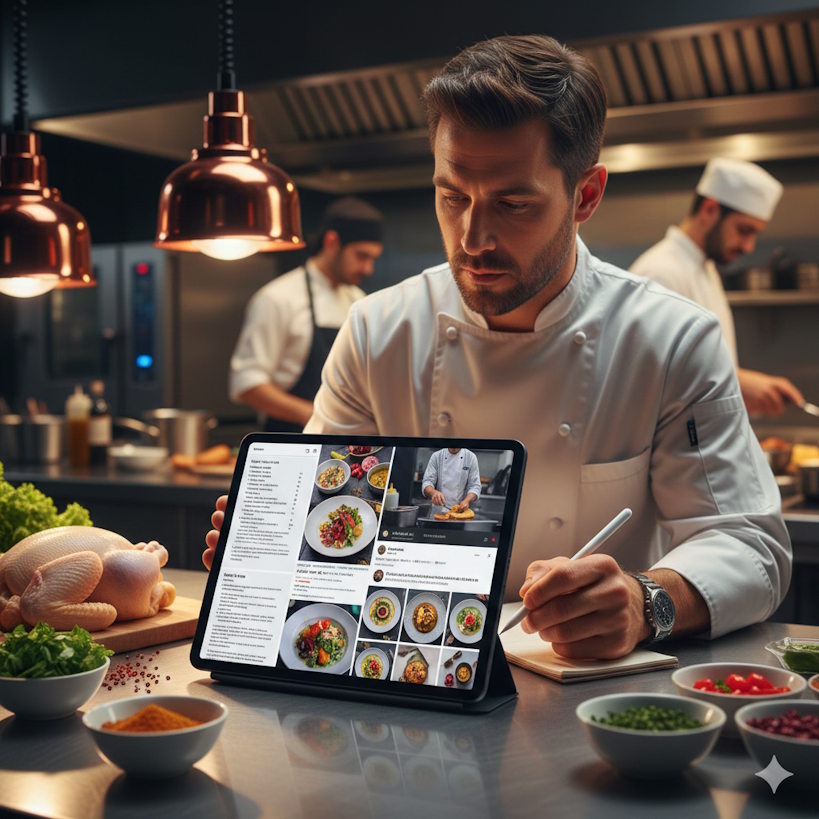
In the fast-paced, ever-evolving world of modern cuisine, a restaurant’s success hinges not only on excellent service and atmosphere but, most critically, on the food. The quality and originality of your menu are your greatest assets. For decades, chefs relied on personal mentors, dusty cookbooks, and years of tireless experimentation to perfect a dish. While those foundational methods remain invaluable, today’s restaurateur has a powerful, virtually limitless resource at their fingertips: the internet.
Harnessing the digital world to scout, refine, and adapt the “best” recipes for your establishment is a modern necessity. It’s a strategic move that saves time, cuts costs, and, most importantly, keeps your menu fresh, relevant, and ahead of culinary trends. This isn’t about blindly copying; it’s about intelligent sourcing, adaptation, and transformation.
The Recipe Hunt: Moving Beyond the Basics
Finding a recipe online is easy. Finding the best recipe—one that is scalable, profitable, appeals to your target demographic, and fits your restaurant’s unique identity—requires a methodical approach. The internet provides a multi-layered ecosystem of culinary knowledge, far exceeding simple food blogs.
1. Tap into the Professional Culinary Community
Forget the amateur home-cook sites for a moment. The first place a serious chef should look is where other professionals gather and share. This often takes the form of industry-specific forums, online magazines, and dedicated digital libraries created by established culinary schools or associations.
- Industry Publications & Digital Journals: These sources often publish recipes created by award-winning, working chefs. These recipes are already conceived with professional kitchens in mind, meaning they typically include precise measurements, clear mise en place instructions, and techniques suitable for batch cooking and efficient plating. They frequently focus on seasonality and modern techniques like sous vide or fermentation, providing a more robust starting point than a standard home recipe.
- Chef’s Forums and Groups: Digital communities where working chefs discuss challenges, equipment, and new dishes can be a goldmine. The dialogue around a recipe—the substitutions suggested, the mistakes made, the successful adaptations—is often more valuable than the initial ingredient list.
2. Mastering the Art of Recipe Aggregation and Comparison
The beauty of the internet is the sheer volume of information. For any classic dish, you will find dozens, perhaps hundreds, of variations. A crucial step is to treat a recipe search like a scientific investigation.
- The Three-Source Rule: When looking for a recipe for a core item, such as a basic béchamel sauce or a classic French onion soup, pull the recipe from at least three highly-rated, distinct sources (e.g., a top food blogger, a famous chef’s website, and a professional culinary magazine).
- Comparative Analysis: Place the three recipes side-by-side. Look at the ratios. Does one call for double the flour or half the butter? Does one use stock instead of water? The “best” recipe is often the one whose ratios fall within the standard deviation of multiple highly-rated sources, indicating a reliable, balanced foundation. The outliers are where the unique twists (the ‘best’ part) come from, but the average provides the structural integrity.
3. Analyzing Reviews and User Feedback with a Professional Eye
While consumer reviews might seem irrelevant to a professional setting, they offer critical insights into the dish’s flavor profile and public reception.
- Identify Consistency: Look for consistent comments across multiple reviews, both positive and negative. If several reviewers mention the sauce is “a little bland” or the texture is “too dry,” that is a universal flaw you must correct during your adaptation phase.
- Scrutinize Ingredient Quality: Home cooks often substitute ingredients (e.g., using dried herbs instead of fresh, or margarine instead of butter). If a professional-grade recipe is being reviewed by amateurs, look past their substitutions and focus on the comments related to the method and the final outcome. A positive review usually validates the original method.
The Strategy: From Digital Sourcing to Kitchen Execution
Finding the recipe is only the first step. The true mastery lies in adapting it for the unique demands of a commercial kitchen.
4. The Principle of Scalability and Costing
A recipe that works for four servings in a home kitchen will not automatically work for 40 covers in a busy restaurant. The internet allows you to quickly evaluate a recipe’s commercial viability.
- Ingredient Cross-Reference: Use the ingredient list from the sourced recipe and cross-reference it with your existing supplier inventory. Does the recipe call for an exotic ingredient you would have to order in small, expensive batches? The “best” recipe is often the one that utilizes ingredients you already purchase in bulk, which dramatically lowers food cost and reduces waste.
- Time and Motion Study: Look at the steps. If a recipe requires a time-intensive process (e.g., reducing a sauce for two hours, hand-folding hundreds of tortellini), you must consider the labor cost. The internet can help you find modern techniques (like using a pressure cooker for quick stock, or a stand mixer attachment for dough) that achieve the same result in a fraction of the time, making the recipe commercially feasible.
5. Leveraging Video and Visual Media for Technique
Many recipes—especially complex ones involving pastry, butchery, or plating—are poorly explained through text alone. The internet provides an unparalleled visual education.
- YouTube and Professional Demos: A text recipe for a soufflé might say “fold gently.” A professional video can demonstrate the exact angle and speed of the spatula required. Use video platforms not just for recipes, but for mastering the necessary technique that ensures consistency across your line cooks.
- Plating Inspiration: The “best” dish is one that is visually appealing. High-quality images on Instagram, Pinterest, and food photography websites can inspire plating concepts that elevate a simple sourced recipe into a fine-dining experience, making the dish stand out on your menu.
The Iteration and Refinement Loop
The internet’s biggest gift to a restaurant is the ability to stay dynamic. A successful menu is not static; it evolves based on feedback and trends.
6. Staying Ahead of Culinary Trends
The internet is the epicenter of food trend creation and dissemination. From Dalgona Coffee to Birria Tacos, a trend can go global overnight.
- Trend Spotting: Regularly monitor food trend reports published by major consulting firms, and watch what is being featured by high-profile food influencers. This allows you to integrate trending flavors or ingredients (e.g., ube, gochujang, activated charcoal) into your classic dishes, giving them a modern edge. Finding the “best” recipe means finding the recipe that will still be relevant in six months. You can find some source of references: Jasa Google Ads, Google Group & User Terb at Projectco.
7. Digital Feedback Integration
Once you launch the adapted recipe, the internet provides instant feedback that would take months to gather through traditional comment cards.
- Social Listening: Monitor your restaurant’s social media mentions and online review sites (Yelp, Google, etc.). If a significant number of diners praise your new dish, you know the recipe is a winner. If they criticize the spice level or the portion size, you have a direct, real-time indicator of what needs to be adjusted in your next kitchen refinement.
In conclusion, using the internet to find recipes is not a shortcut; it is a strategic augmentation of the chef’s expertise. The digital landscape offers professional resources, unparalleled visual instruction, real-time market data, and a vast library of comparative knowledge. By approaching the internet not as a simple cookbook, but as a sophisticated research tool, a restaurateur can source, adapt, and refine their menu to ensure that every dish served is, quite literally, the best possible version it can be. This integration of old-world skill with new-world technology is the hallmark of the successful modern restaurant.